01
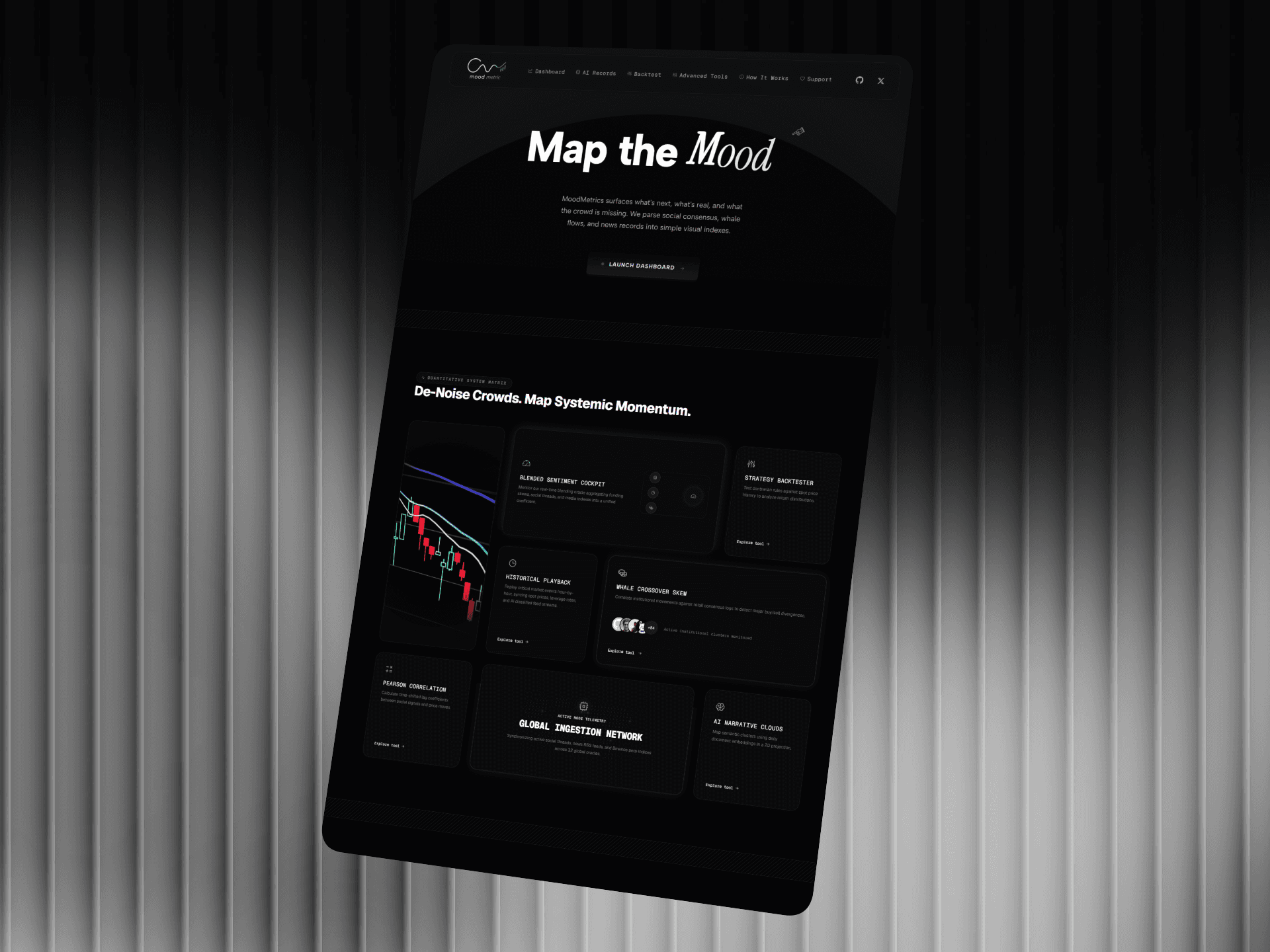
Five sources, one number
Each source gets a weight. Reddit carries the most because that's where the mood lives, then news, then funding rates and Fear & Greed as a sanity check.
Llama 3.1 (through Nvidia NIM) reads every post and returns a label, a score, a confidence and its reasoning. When the model's JSON comes back messy, a fallback parser still pulls the answer out.
02
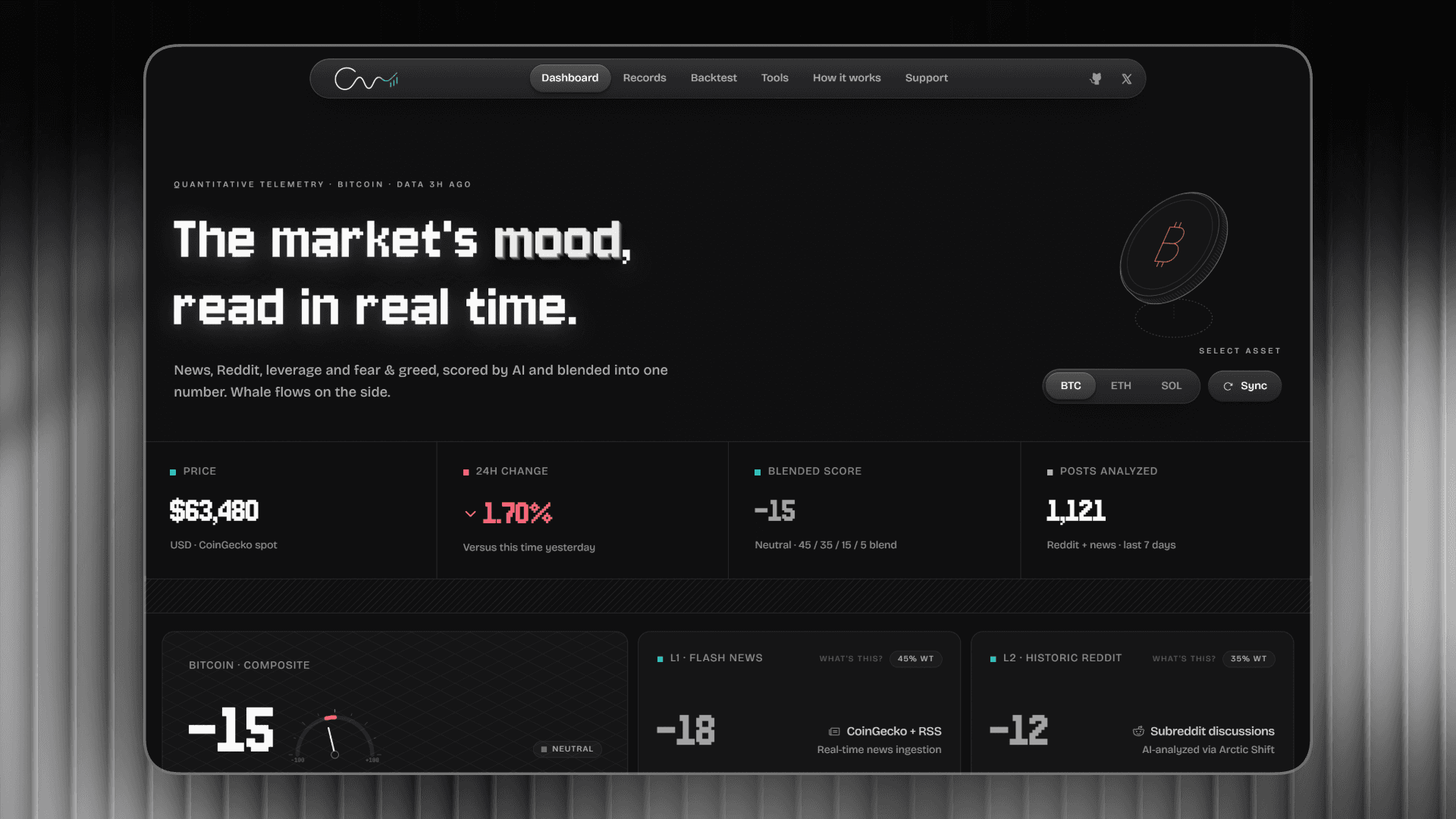
Scraping without getting blocked
Reddit hates scrapers, so the ingester is polite and stubborn: it backs off exponentially, rotates user agents, runs requests one by one with random jitter, waits out Retry-After and falls back to Arctic Shift when it has to.
I also swapped a paid news API for my own Cheerio scraper. It throws away scripts, footers and ads, finds the article body and only keeps stories that actually mention a coin I track.
03
Tools for the curious
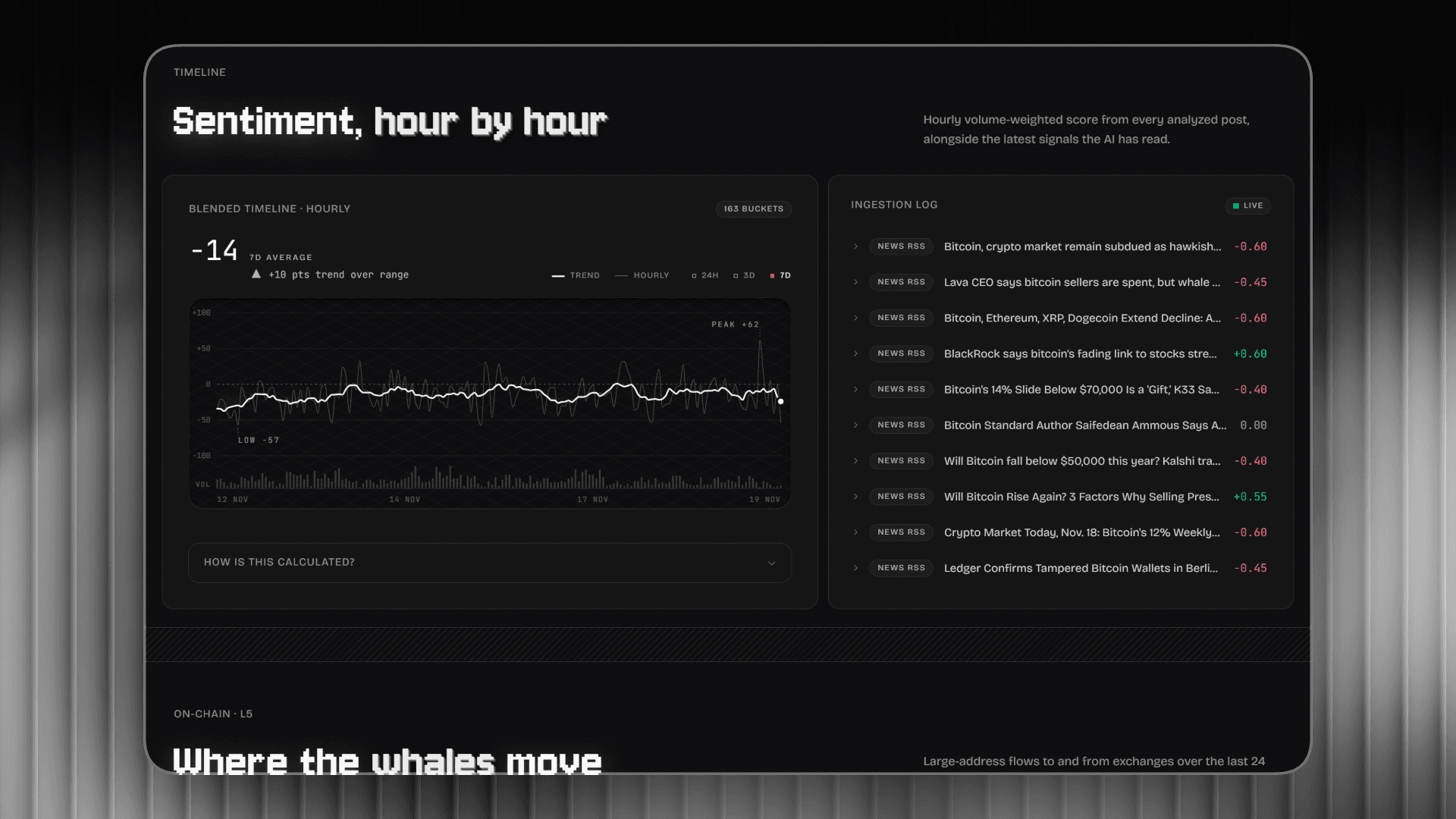
A backtester trades on sentiment against real history and compares the result with simply holding. A lag-correlation view checks whether mood leads price or just follows it.
Every AI verdict is stored with a pgvector embedding, so similar takes can be clustered into narratives and tracked over time. There's also a whale-vs-retail index built from the stored data.
04
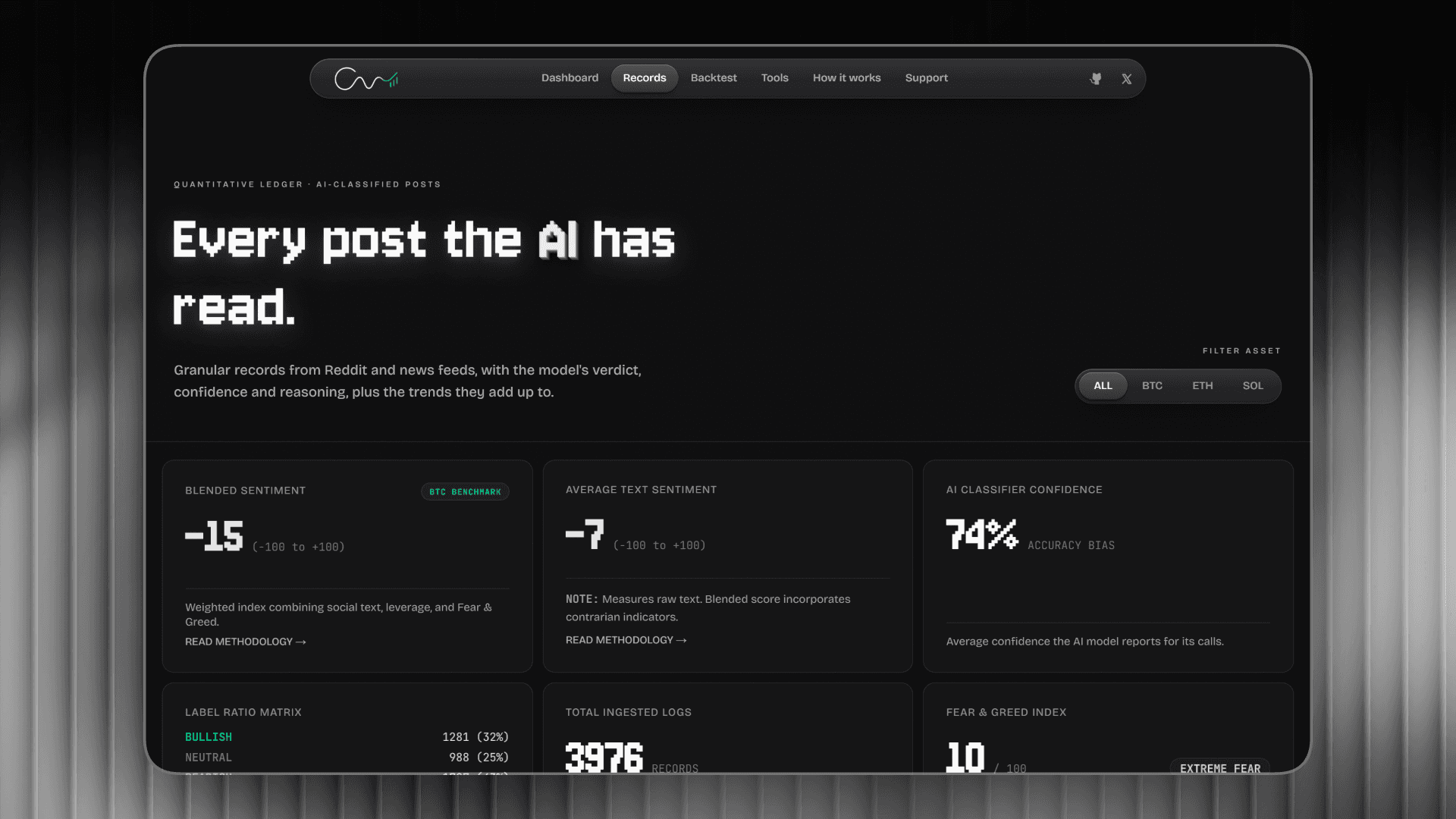
A pipeline that runs itself
Two cron jobs keep it alive: a quick scrape every 30 minutes and a deep Reddit pass every 6 hours. A cache table stops duplicates, and hourly rollups are pre-computed so the dashboard loads instantly.
Newer posts, more credible sources and more-upvoted posts count for more, so one viral meme can't swing the whole score.
05
Made to feel good
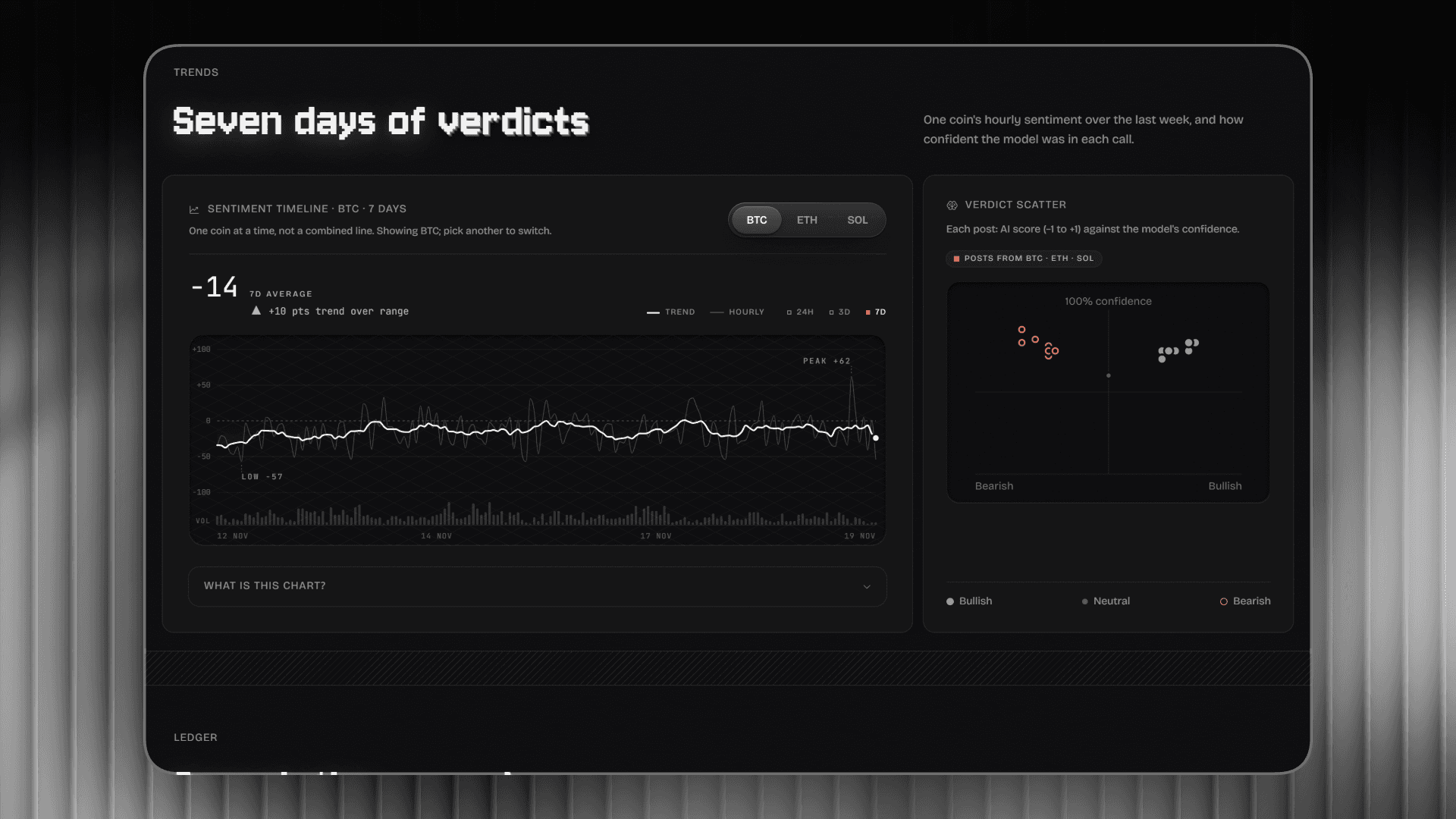
The UI is dark, tactical and a little dramatic: a gauge needle on springs, glowing arc horizons, floating particles and a retro CRT loader that shares bits of crypto history while the data loads.